Weekly Planning in Under 30 Minutes

Inside: Weekly planning doesn’t have to take hours or feel overwhelming. Here’s a simple 30-minute system that helps you set priorities, batch your tasks, and actually feel prepared before the week starts.
Weekly planning has a reputation for being one of those things that sounds great in theory and never actually happens.
You sit down with the best intentions, stare at a blank page or an overwhelming calendar, spend 45 minutes feeling stressed about everything you have to do, and walk away feeling worse than when you started.
That’s not planning. That’s worrying with a notepad.
Related: Weekly Planning Favorites on Amazon
How to Plan Your Week in Under 30 Minutes
Real weekly planning is faster, calmer, and more useful than most people expect. When it’s done right, it doesn’t add to the mental load. It reduces it. You spend 30 minutes making decisions once so you’re not making them over and over again all week long.
Here’s exactly how to do it.
Why Most Weekly Planning Fails
Before getting into the system, it’s worth understanding why weekly planning so often falls apart.
The most common mistake is treating planning time like a brainstorming session. You open a notebook, start writing down everything you need to do, and end up with a list of 47 items that makes the week feel impossible before it’s even started.
The second mistake is ignoring what’s already on the calendar. A plan that doesn’t account for the dentist appointment, the school pickup schedule change, the work deadline, and the soccer game on Thursday isn’t a plan. It’s a wishlist.
The third mistake is inconsistency. Planning once and then not doing it again for 3 weeks means starting from scratch every time, which is slow and discouraging.
A weekly planning session that actually works is short, structured, and follows the same sequence every single time. Once the sequence is familiar, 30 minutes is plenty.
Related: Weekly Planning Toolkit with Printables
Before You Plan: The 5-Minute Brain Dump
The first step happens before any actual planning takes place.
Spend 5 minutes writing down everything that’s floating around in your head. Every task, every errand, every obligation, every thing you’ve been meaning to do, every thing someone asked you to do that you haven’t written down yet. Get it all out.
Don’t organize it. Don’t prioritize it. Just get it out of your head and onto paper.
This step matters because trying to plan while also trying to remember everything is too much to do at once. The brain dump clears the mental clutter so the actual planning can happen with a clearer head.
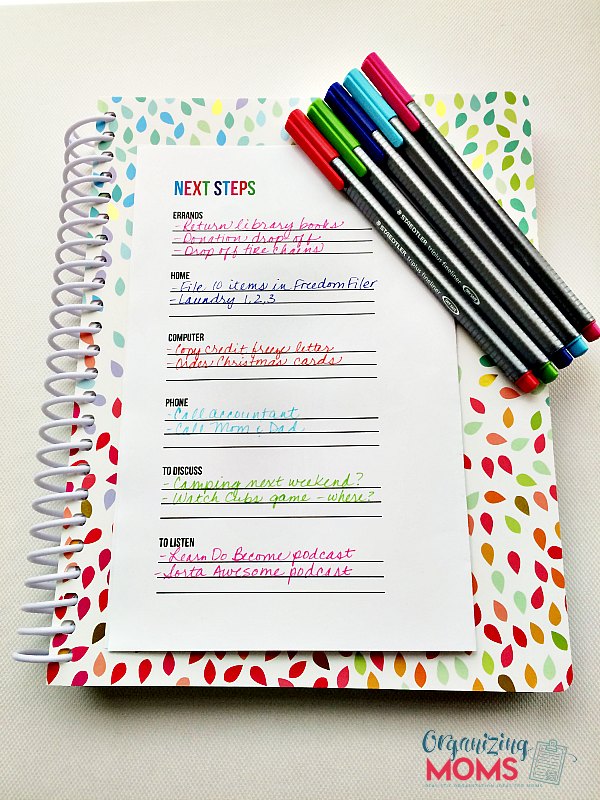
A simple notepad works perfectly for this. As an Amazon affiliate, I earn from qualifying purchases.

Some people prefer a dedicated journal they use specifically for brain dumps and weekly planning. Either way, the format matters less than the habit of doing it consistently before every planning session.
Start With What’s Already There
Once the brain dump is done, open the calendar before touching the to-do list.
This is the step most people skip, and it’s one of the most important ones. Your calendar tells you what’s already claimed for the week. Appointments, commitments, kids’ activities, work obligations, social plans, anything that has a fixed time attached to it.
Look at the whole week and ask: how much real, usable time do I actually have?
Most people dramatically overestimate how much free time a week contains. When you map out what’s already there, you can see the gaps clearly. And planning into the actual gaps is so much more realistic than planning into an imaginary open week that doesn’t exist.

A large wall calendar that shows the whole family’s schedule at a glance makes this step faster.

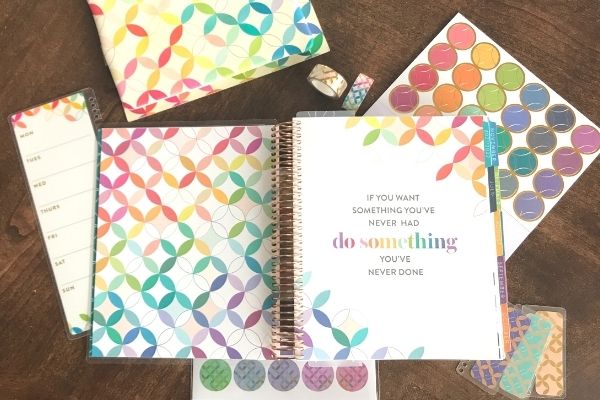
A weekly planner that shows the full week on 1 or 2 pages works well too, especially for planning both personal and work tasks in the same view.
The 3-Priority Method
Here’s where most planning goes wrong: the to-do list.
A to-do list with 47 items isn’t a plan. It’s a source of anxiety. No week has enough hours to accomplish 47 things, and staring at a list that long makes it hard to know where to start, which means you often don’t start at all.
Instead, choose 3 priorities for the week. Just 3.
These are the non-negotiable things that, if they happen, make the week a success regardless of what else does or doesn’t get done. Not the easiest things. Not the most fun things. The most important things.
A few questions that help identify the right 3:
- What has a deadline this week?
- What has been on the list for weeks and keeps getting pushed?
- What will cause the most problems if it doesn’t happen?
Everything else on the brain dump list is a bonus. If it gets done, great. If the week gets away from you and only the 3 priorities happen, the week was still a win.

A weekly planner pad with a dedicated priority section makes this concrete and visible.
Batch Your Tasks by Day or Energy
Once the 3 priorities are set, look at the remaining tasks from the brain dump and start assigning them to days.
The key here is batching. Grouping similar tasks together so the brain isn’t constantly switching contexts. Context switching is one of the biggest drains on focus and productivity, and it happens constantly when the day is a random mix of unrelated tasks.
A few examples of what batching looks like in practice:
- Errand day: all the errands that require leaving the house happen on the same day, in 1 trip
- Admin day or admin block: emails, phone calls, scheduling, paperwork, all handled in 1 sitting
- Creative or deep work block: the tasks that require real focus get a protected block of time when energy is highest
Energy matching matters too. Hard, focus-intensive tasks belong in the part of the day when energy is highest. Easy, low-stakes tasks like filing, responding to simple messages, and tidying belong in the lower-energy windows.
Protect at least 1 focused work block every day. Even 45 minutes of uninterrupted time moves things forward faster than 3 hours of fragmented, interrupted work.
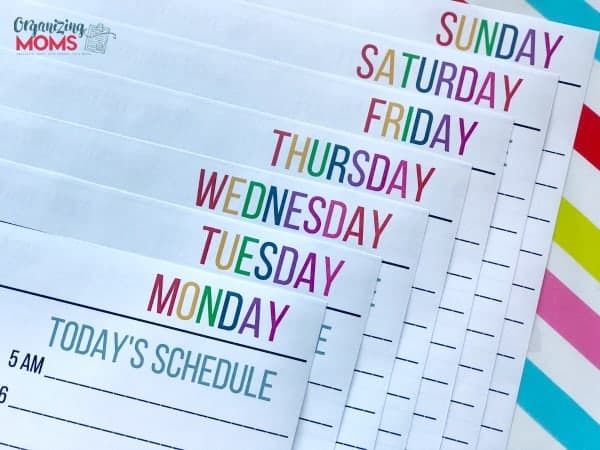
A time-blocking planner helps make this visual and concrete.
The Weekly Planning Routine That Actually Sticks
The system only works if it actually gets done consistently. And consistency requires making it easy and making it enjoyable.
Pick a consistent day and time. Sunday evening and Monday morning are the 2 most popular options. Sunday evening means the week starts with a plan already in place. Monday morning means the plan gets made with fresh eyes before the week picks up momentum. Pick whichever fits better and protect that time every single week.
Follow the same sequence every time. Brain dump first. Calendar check second. 3 priorities third. Task batching fourth. Same order, every week. When the sequence is familiar, the session gets faster and easier over time.
Here’s what 30 minutes actually looks like:
- 5 minutes: brain dump
- 5 minutes: calendar review
- 5 minutes: identify the 3 priorities
- 10 minutes: assign remaining tasks to days
- 5 minutes: review and adjust
Make it enjoyable. A planner you love to open. A good mug with something warm. A quiet spot without interruptions. A small ritual that signals this is planning time. The more the session feels like something you get to do rather than something you have to do, the more likely it is to actually happen every week.
You may also like…How to Design Your Weekly Review Admin Day
How to Plan Your Week and Actually Follow Through
The goal of a weekly plan isn’t perfection. It’s momentum.
When you sit down for 30 minutes at the start of the week and make your decisions in advance, the week stops feeling like something happening to you and starts feeling like something you’re actually in charge of.
Brain dump, calendar check, 3 priorities, batched tasks, same time every week. That’s 30 minutes that pays back hours of scattered thinking, reactive decision-making, and the low-grade stress of feeling behind before Tuesday.
Try it once and see what a planned week actually feels like.
Related: The Weekly Reset: A Game-Changer for Busy Parents

New to this community? Start here, friend!