How to Organize Your Entryway for Maximum Function
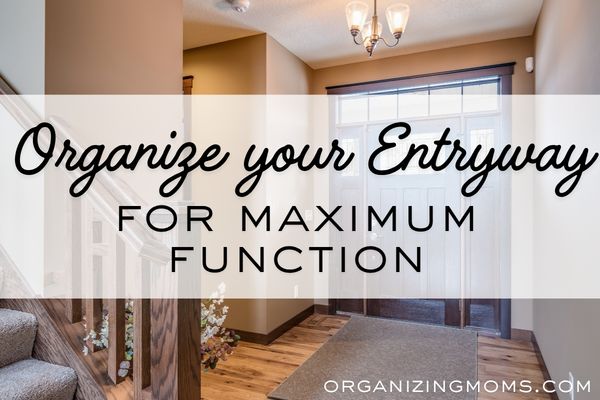
Inside: A disorganized entryway costs you time, patience, and at least one set of lost keys per month. Here’s how to set up a system that actually holds up to daily family life.
How to Organize Your Entryway for Maximum Function
The entryway is the first space everyone enters and the last space anyone thinks to organize.
That’s backwards.
A functional entryway saves time every single morning and keeps the rest of the house from absorbing the chaos of daily comings and goings.
Here’s how to build one that works.
Why Entryways Become Dumping Grounds
Every item that lands in the entryway without a designated spot becomes part of a pile, and piles compound fast.
Shoes migrate from the door to the middle of the floor.
Keys end up in a different place every day, which means someone is searching for them every morning at the worst possible time.
Bags, mail, jackets, and random items from pockets all accumulate because there’s nowhere specific for any of them to go.
The entryway doesn’t need more storage. It needs the right storage, placed where people actually stop when they walk in the door.
Related: Entryway Organization Ideas on Amazon
Start With an Honest Edit
Before buying a single organizer or installing a single hook, pull everything out of the entryway completely.
Look at what’s actually there and ask two questions: does this item need to live at the entry, and does it leave the house regularly?
Items worth keeping at the entry include shoes, bags, coats, keys, and anything that goes out the door daily.
Everything else gets relocated before any organizing happens, because organizing around items that don’t belong there just creates a more organized version of the same problem.
The Landing Zone: Give Everything a Home
The organizing principle that makes an entryway actually functional is simple: every item that comes through the door needs a specific, consistent spot.

Keys belong in one bowl or on one hook, always in the same place, so finding them takes zero thought on the way out. As an Amazon affiliate, I earn from qualifying purchases. A small key bowl on a console table or a hook by the door both work well depending on the layout.

Bags and backpacks need a hook per person, positioned at the right height for whoever is using it. A multi-hook rack handles a whole family without taking up floor space.

Shoes need a designated landing spot, whether that’s a shoe rack, a boot tray, or a bench with storage underneath. The specific solution matters less than having one at all.
Mail and paper need a single tray so they don’t spread across every surface within reach. A simple mail sorter keeps paper contained and visible without becoming its own pile.
Related: Drop Zone Ideas You’ll Wish You’d Started Sooner
What to Do Without a Real Entryway
Plenty of homes don’t have a dedicated entryway, particularly older homes and smaller spaces where the front door opens directly into the living room.
That’s not a reason to give up on the system. It’s a reason to get creative with the space that does exist.

A slim console table against the wall nearest the door creates a surface for keys, mail, and everyday items without eating into the room.
Adhesive hooks on the wall beside the door handle bags and coats without requiring any permanent installation.

An over-door organizer adds storage on the back of the door for smaller items like sunglasses, chargers, or dog leashes.

A small bench with storage does double duty, providing a place to sit while putting on shoes and hiding the shoe collection inside.
The goal is to create the function of an entryway in whatever space exists, rather than waiting for a home with a proper one.
The Family Entryway: Making It Work for Multiple People
A single-person entryway system is straightforward. A family entryway is a different challenge entirely.
One hook per person is the rule that holds everything else together, because shared hooks mean shared chaos.
Labeled spots for each family member eliminate the daily argument about whose bag is blocking whose shoes.

A charging station near the entryway handles the devices that leave the house every day, so nobody is sprinting back inside for a dead phone.
A seasonal bin tucked into a cabinet or on a low shelf manages the stuff that rotates with the weather: sunscreen and bug spray in summer, gloves and hats from October through March.
The 2-Minute Entryway Reset
An entryway system holds up only when there’s a daily habit attached to it.
The habit is simple: everything that came in goes to its spot before anyone sits down.
Shoes on the rack, bags on the hooks, keys in the bowl, mail in the tray.
It takes about 2 minutes when everyone does it consistently, and it takes about 2 weeks of reminding before kids start doing it without being asked.
A weekly scan on Sunday catches anything that drifted during the week and keeps the system from slowly reverting to the pile it used to be.
An Entryway System That Works for Your Home
A functional entryway doesn’t require a renovation, a big budget, or a dedicated mudroom.
Start with 3 things: a spot for keys, hooks for bags, and a place for shoes.
Get those working consistently, then add whatever the household actually needs from there.
The system that works is the one that matches how the family actually moves in and out every day, not the one that looks best on a home organization account.
New to this community? Start here, friend!