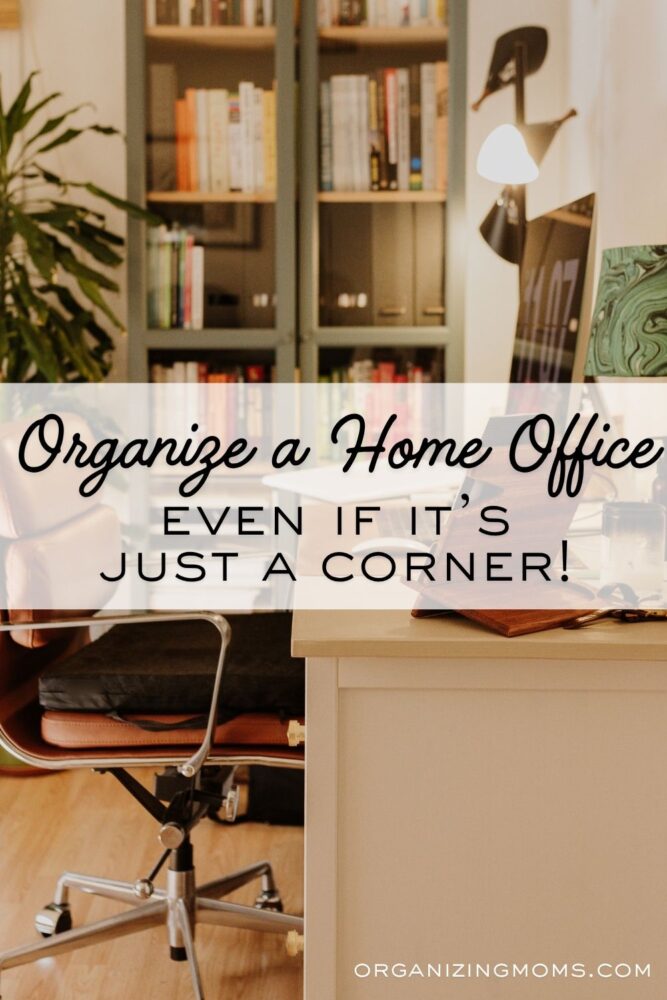
How to Organize a Home Office (Even If It’s Just a Corner)

Inside: A home office doesn’t require a dedicated room or a renovation budget. Here’s how to set up a workspace that supports real focus, even if all you have is a corner.
Quick heads-up: I hand-pick the concepts and links for this specific post, but I used AI to help write the full text draft. By leveraging AI for the writing process, I can focus my time on finding the best resources and delivering deeper, more helpful content to you. As always, this post was fully reviewed, fact-checked, and edited by me before hitting publish!
How to Organize a Home Office (Even If It’s Just a Corner)
The size of the workspace matters a lot less than most people think.
A cluttered 12-by-12 office is harder to work in than a well-organized corner of the dining room, and the reason comes down to what the brain does with visual clutter.
Every visible unfinished item, a stack of papers, a tangle of cords, a pile of things that don’t have a home, registers as an open task competing for attention before the workday even starts.
Fixing the workspace doesn’t start with buying anything. It starts with editing.
Why Your Workspace Is Working Against You
A clear desk isn’t just aesthetically pleasing. It’s cognitively easier to work at.
Research on attention consistently shows that environmental clutter increases cognitive load, which means the brain is doing extra work just to sit down and start.
And that extra work compounds over a full day of trying to focus.
The workspace doesn’t have to be large or beautiful. But it does have to be intentional, because an unintentional workspace will always pull attention away from the actual work.
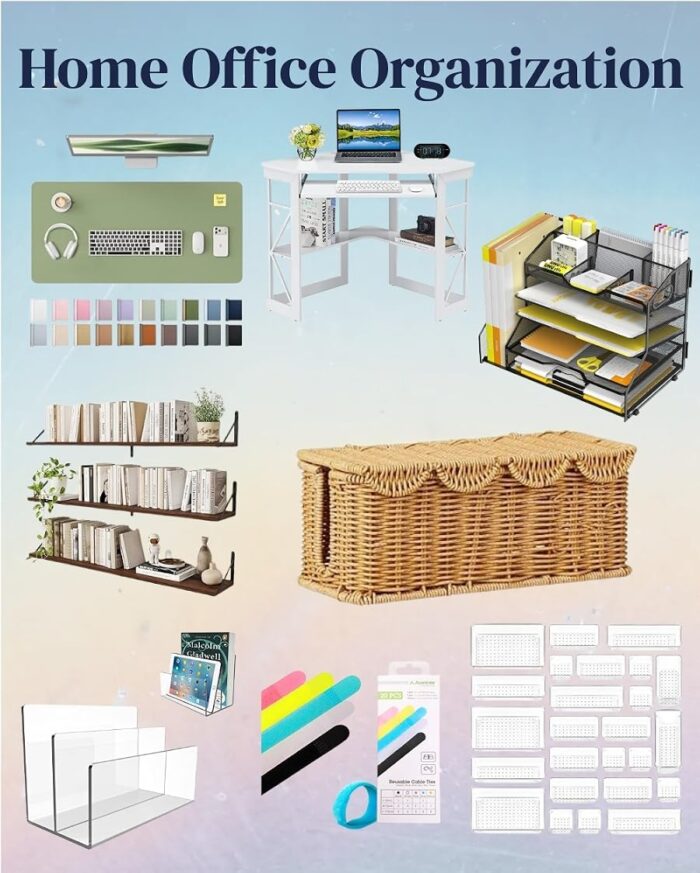
Related: Home Office Organization Favorites on Amazon
Start With an Edit
Pull everything off the desk and out of the immediate workspace before touching a single organizer.
Look at what’s actually there and ask one question: does this item support the work that happens here?
Active project materials, daily supplies, the computer and its accessories stay. Everything else gets relocated before organizing begins, because building a system around items that don’t belong there just creates a tidy version of the same problem.
Most home offices have an accumulation problem, not a storage problem. Edit first. Shop later, if at all.
Choosing and Claiming Your Space
Working from the couch or the kitchen table is sometimes necessary, but it makes sustained focus harder over time because the brain never learns to associate those spots with work.
A dedicated surface, used consistently and set up intentionally, becomes an environmental cue that shifts the brain into focus mode before the first task even starts.
As an Amazon affiliate, I earn from qualifying purchases.

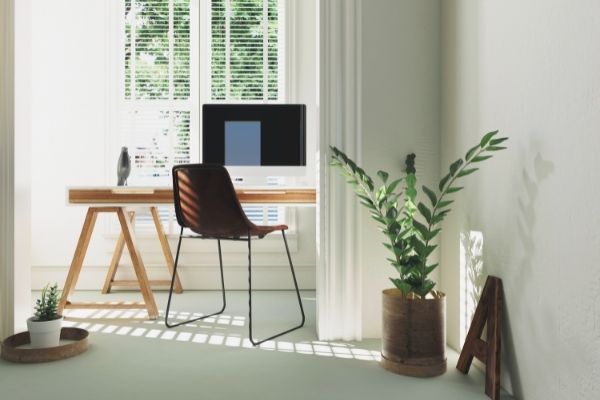
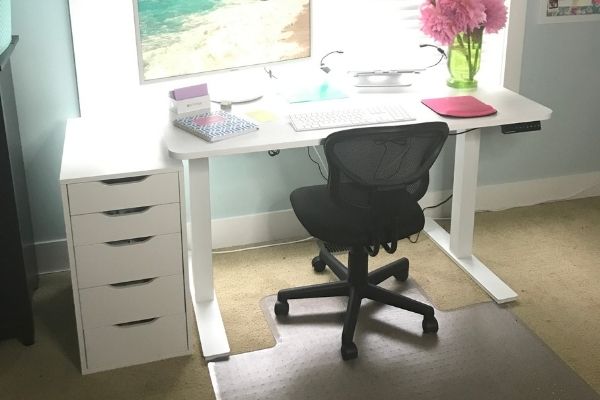
Good options for small spaces include a corner desk that fits into an unused room corner, a closet with the doors removed and a shelf installed at desk height, or a small desk tucked against a bedroom wall.
Natural light to the side of the screen, manageable foot traffic, and a setup that doesn’t need to be packed away daily are the 3 things worth prioritizing when choosing the spot.
The Desktop: Keep Only What’s Used Daily
The desktop is the most valuable real estate in the workspace. Treat it accordingly.
What earns a permanent spot: the computer, the current active project, a notepad, a pen, water. That’s a complete desk.
A monitor riser brings the screen to eye level and creates a shelf underneath for a keyboard or notebook. 2 problems, 1 solution.

A desk organizer with sections for pens, scissors, and small supplies keeps the surface from collecting the random items that drift there throughout the day, because they will drift there without a system to stop them.
And a pen cup, yes, just a pen cup, means writing tools are always where they belong. It sounds trivial. It saves more time than it should.
Cable and Cord Management
Cables are visual chaos, and they’re also the easiest problem in a home office to actually solve.

A cable management box hides the power strip and the excess cord that pools on the floor. Ten minutes to set up. The desk looks completely different afterward.

Cable clips route cords along the back edge of the desk instead of trailing across the surface.
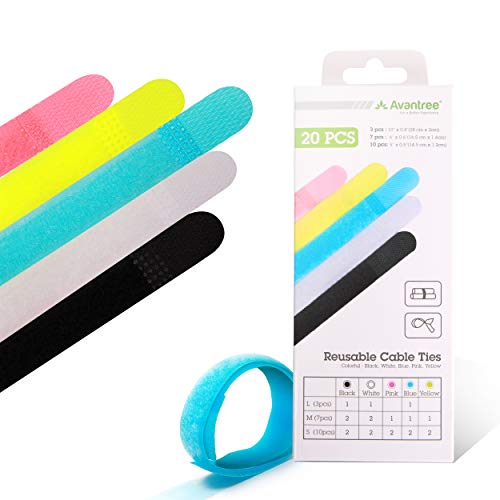
Velcro ties bundle everything behind the setup so the back of the desk is as clean as the front.
Do this once. It holds up for years.
Storage That Works for a Small Space
Go vertical. It’s the only direction a small home office has room to expand.

Wall-mounted shelves above the desk hold reference materials and supplies that need to be accessible but don’t need to occupy desk space.

A 2-section file system, active paperwork in front and archive behind, keeps paper off the desk without requiring a filing cabinet.
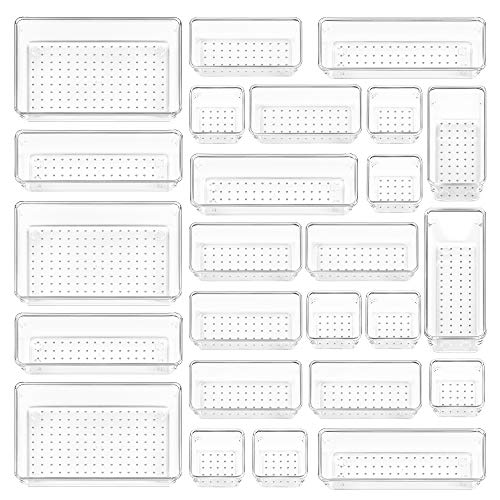
Drawer organizers are non-negotiable. Without them, the desk drawer becomes a junk drawer within 2 weeks. With them, it stays functional indefinitely.
Lighting That Actually Helps You Work
Bad lighting is a focus problem, not just a comfort problem.
Eye strain from poor lighting causes headaches that make sustained concentration harder as the day goes on.
Natural light positioned to the side of the screen, not behind it and not in front of it, is the best setup when available.

When it’s not, a dedicated desk lamp aimed at the work surface rather than the screen makes a real difference in how long focused work is sustainable.
Warmer light for writing and creative work. Cooler, brighter light for detailed or analytical tasks.
Related: How to Set Up an Office Command Central
Making It Feel Like a Space Worth Working In
A workspace that feels good to sit down in gets used consistently. One that feels chaotic or depressing gets avoided.
A few personal touches without adding clutter: 1 small plant, 1 piece of art on the wall nearby, a mug that makes the start of the workday feel intentional rather than obligatory.

A desk mat defines the workspace visually, protects the surface, and makes a corner setup feel like a real office rather than a temporary arrangement.
Same time, same ritual, same spot every day. The environment does more of the motivating than most people expect.
A Home Office That Works for Your Space and Your Work
A functional home office doesn’t require a dedicated room, a renovation, or a significant budget.
Start with the desktop. Clear it down to only what’s used daily, sort out the cables, and add a monitor riser if the screen isn’t at eye level.
Those changes alone make the space noticeably easier to work in, and that’s before touching the storage or the lighting.
Build from there, one problem at a time.
Related: Organizing Your Office With Stuff You Already Have
New to this community? Start here, friend!