How to Stop Procrastinating on the Tasks You Keep Avoiding
Inside: Procrastination isn’t a character flaw or a laziness problem. Research shows it’s an emotion regulation problem, and fixing it starts with understanding which type of avoidance is happening. Here’s what the science says, and what to do about it.
How to Stop Procrastinating on the Tasks You Keep Avoidig
That task has been on the list for 6 weeks.
You’ve moved it from Monday to Wednesday, from this week to next week, from the top of the list to somewhere in the middle where it’s easier to ignore.
Every time you skip it, you feel a little worse. Which makes it harder to start. Which makes you more likely to skip it again.
That’s not laziness. That’s a very predictable psychological pattern, and understanding it is the first step to breaking it.
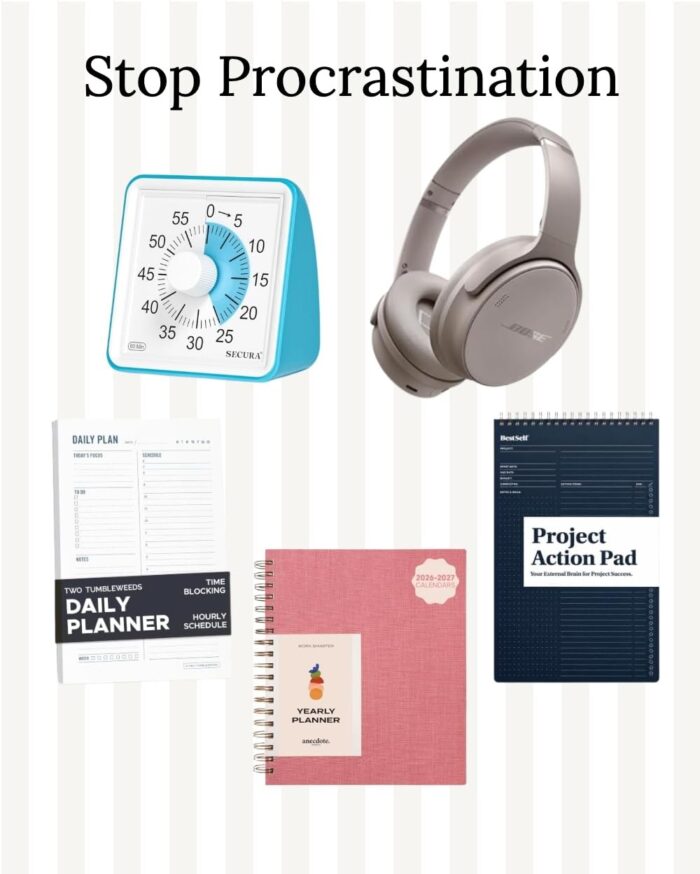
You may also like: Stop Procrastination with these Amazon favorites
Why You Procrastinate on Specific Tasks (It’s Not Laziness)
Researchers Fuschia Sirois and Timothy Pychyl have spent years studying procrastination.
Their conclusion, published in the Journal of Rational-Emotive and Cognitive-Behavior Therapy, is that procrastination is an emotion regulation problem, not a time management problem.
The brain doesn’t avoid the task. It avoids the feeling attached to the task.
Boredom, anxiety, self-doubt, frustration — any of these can send the brain looking for something that feels better right now.
This reframe matters because it changes where the solution lives. Trying harder and setting more reminders don’t address the actual problem. Understanding what the task feels like — and why — does.
Most avoided tasks fall into 3 categories: tasks that feel unclear, tasks that feel overwhelming, and tasks that carry emotional weight. Each needs a different fix.
The Tasks That Feel Unclear
A vague task is almost impossible to start.
“Deal with the garage.” “Sort out the insurance situation.” “Handle the school stuff.”
These aren’t tasks. They’re outcomes. And the brain stalls in front of them because there’s no clear first action to take.
Peter Gollwitzer’s research on implementation intentions, published in American Psychologist in 1999, shows that deciding in advance exactly when, where, and how you’ll do something dramatically increases follow-through.
The fix is simple: rewrite vague tasks as specific next actions.
“Deal with the garage” becomes “spend 20 minutes sorting the shelf by the door on Saturday morning.”
“Handle the school stuff” becomes “email Ms. Rodriguez about the field trip permission slip before 3pm today.”
One action. One time. One location. That’s an implementation intention, and the research shows it works.
As an Amazon affiliate, I earn from qualifying purchases.

A good planning notepad makes this habit easier — somewhere to break projects into actual next steps rather than carrying vague outcomes around all week.
The Tasks That Feel Overwhelming
Some tasks don’t feel unclear. They feel enormous.
And the brain responds to enormous tasks by finding something else to do.
The most useful tool here is radical reduction. Not “how do I get this done” but “what is the absolute smallest action I could take right now.”
Not “clean out the closet.” Just “open the closet door.”
That sounds absurd. But it works. Starting is the hardest part, and a tiny first action lowers the barrier enough that the brain stops treating the task as a threat.
BJ Fogg’s behavioral research from Stanford supports this directly: every extra step between a person and a behavior increases the chance that behavior won’t happen.
Alejandro Lleras at the University of Illinois found in a 2011 study published in Cognition that brief mental breaks during a long task prevent the performance decline that makes people want to quit.
Working in shorter focused bursts keeps motivation higher throughout the session.
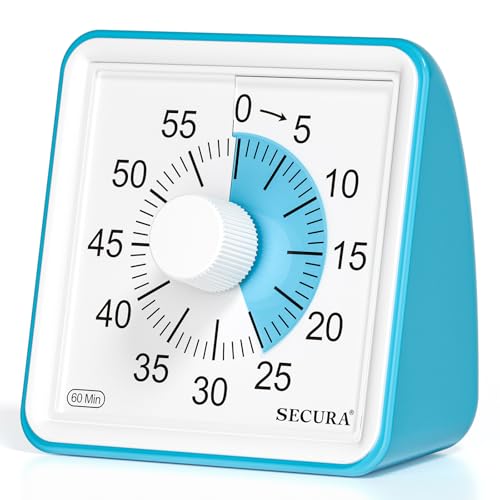
A simple timer makes this easy to implement.

A daily planning pad with space to write the single most important next action keeps the starting point visible.
The Tasks That Carry Emotional Weight
This is the category most productivity advice skips. It’s often the most important one.
Some tasks sit on the list not because they’re unclear or overwhelming, but because they’re attached to something uncomfortable.
A difficult phone call. A medical appointment that feels scary to schedule. A financial task that requires looking at numbers that feel bad to look at.
The avoidance makes sense. The brain is trying to protect against discomfort.
Sirois’s 2013 study in Personality and Individual Differences found a direct link between procrastination and poor self-compassion.
People who are harder on themselves after avoiding a task procrastinate more, not less. Shame adds to the emotional weight rather than reducing it.
Kristin Neff’s research on self-compassion, published in Self and Identity, points in the same direction: treating yourself with patience and understanding improves follow-through on difficult tasks more effectively than self-criticism does.
2 things that help with emotionally weighted tasks: naming the feeling attached to the task out loud or in writing, which reduces its intensity, and giving yourself permission to do the task imperfectly rather than waiting until it can be done perfectly.
Body doubling is worth trying too. Working alongside another person, whether in the same room or on a video call, makes hard tasks significantly easier to start. The research base is still growing, but the practical experience of people who use it consistently suggests it works.
Related: Focus on Your Big Goals with a Power Hour
The Procrastination Environment
The environment either makes starting easier or makes avoidance easier.
Most people’s default environments are quietly set up for avoidance.
Fogg’s friction research is useful here. Every extra step between a person and a task increases the likelihood the task won’t get done.
The phone on the desk. The notifications on. The supplies in another room. The file buried 3 folders deep. Each of these is a small friction that compounds into a reason not to start.
Reducing friction looks like: pulling up the document before sitting down to write, setting out the supplies the night before, putting the phone in a different room during the focused work window.

Noise canceling headphones are one of the most effective environmental changes for anyone working in a noisy space or a home with other people in it.
A clear desk surface reduces the cognitive load of sitting down, which makes starting easier before anything else changes.
Building a System That Catches Avoided Tasks Early
The best time to deal with a procrastinated task is before it becomes a 6-week-old item on a list.
A weekly planning session that includes a quick scan for tasks appearing more than twice is one of the most useful habits to build.
When something keeps getting bumped, that’s information. About clarity. About emotional weight. About whether it’s even the right task to be doing at all.
Gollwitzer’s implementation intentions research applies here too. Tasks assigned a specific time and place are significantly more likely to happen than tasks sitting on a list with no plan attached.
Time-blocking a consistent window for the tasks that always get avoided — Tuesday mornings, the first hour of Friday — removes the daily decision of when to deal with them.
And telling another person about a task and when you plan to do it increases follow-through significantly. A quick text to a friend saying “I’m going to call the insurance company by noon today” is enough.
Related: Micro Time Wasters

A weekly planner with space for priorities and time blocks makes this system easy to maintain.
What to Do When You Still Can’t Start
Sometimes all of this isn’t enough, and the task sits there anyway.
For those moments, commit to 1 minute. Not the whole task. Not even a meaningful portion of it. One minute, on a timer, doing anything related to the task.
Most of the time, starting for 1 minute leads to continuing.
The Pomodoro technique, 25 minutes of focused work followed by a 5-minute break, aligns well with Lleras’s finding that brief breaks maintain performance over time.
And when none of it works on a particular day, Sirois’s self-compassion research offers the most practical advice of all: being kind to yourself after a missed task actually reduces future procrastination.
Shame compounds avoidance. Self-compassion interrupts it.
How to Finally Get the Tasks Done That Keep Getting Avoided
Procrastination doesn’t respond well to willpower or self-criticism.
It responds to clarity, reduced friction, and self-compassion.
The task that’s been on the list for 6 weeks probably needs 1 of 3 things: a clearer next action, a smaller starting point, or an honest look at what emotion it’s carrying.
Figure out which one. Address that first. The task becomes a lot easier to start.
New to this community? Start here, friend!