Linen Closet Organization: A Simple System That Lasts
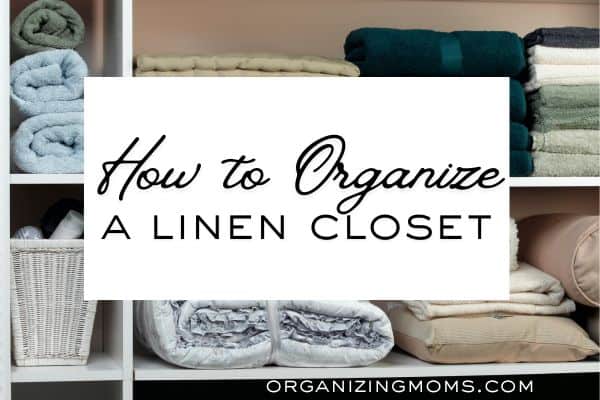
Inside: Linen closet organization that works isn’t about perfect folding or color-coded shelves. Here’s a simple, practical system for organizing your linens — including what to do if you don’t have a dedicated linen closet at all.
The linen closet is one of those spaces that starts out organized and then quietly falls apart over time.
One day everything is neatly folded and stacked. A few months later it’s a pile of mismatched towels, a fitted sheet that somehow became a ball, and three pillowcases with no matching set in sight.
Sound familiar?
Linen Closet Organization: A Simple System That Lasts
The good news is that a linen closet is one of the easiest spaces in the house to get under control. You don’t need a big budget or a whole weekend. You just need a simple system that actually makes sense.
Here’s how to build one.
Related: Favorite Linen Closet Organization Tools
The Real Problem With Most Linen Closets
Before you fold a single thing or buy a single bin, it’s worth understanding why linen closets fall apart in the first place.
The answer is almost always the same: too much stuff.
Most households have far more sheets and towels than they actually need. Sets that were gifts. Towels that are fine but not your favorites. Sheet sets for a bed you no longer own.
They all end up in the linen closet, and over time the closet just runs out of room to store them all.
The fix starts with editing, not organizing.
A simple rule that works for most households: two sets of sheets per bed, two sets of towels per bathroom. One set in use, one set clean and ready to go. That’s genuinely all you need.
Pull everything out, count your sets, and donate or repurpose the rest. It feels a little uncomfortable in the moment and extremely freeing about ten minutes later.

Or if you’re not ready to let go of everything yet, consider packing up your extra linens in a vacuum-sealed storage bag to save space and preserve your linens.
How to Fold Towels and Sheets So They Actually Fit
Once you’ve edited down to what you actually need, folding becomes so much more manageable.
For sheets, the game changer is folding everything as a complete set.
Fold the flat sheet, the fitted sheet, and the pillowcases together — then store them as one unit inside one of the pillow cases.
No more hunting for a matching fitted sheet or discovering you have four flat sheets and zero fitted ones. Everything for one bed gets stored together.
For the fitted sheet itself, there are two options:
The file-fold method takes a little practice but results in a neat, stackable rectangle. Tuck the corners into each other, smooth it out, and fold it down to size. There are plenty of tutorials online if you want a visual — it’s one of those things that clicks once you see it done. Or not.
I’ve never been able to get this to work, so I just fold them the best I can and call it a day. 😭
As an Amazon affiliate, I earn from qualifying purchases.

If folding fitted sheets makes you want to throw the whole thing across the room, sheet organizers [affiliate link] are a completely valid alternative. Slide the whole set into a zippered organizer, label it, and stack them in the closet. Done. No folding required.
For towels, consistency is the key. Pick one folding method and use it every time. Fold in thirds lengthwise, then fold in half or thirds again depending on your shelf depth. Or roll them up so they fit in a smaller space. When everyone in the house folds towels the same way, they actually stack neatly and stay that way.
How to Zone Your Linen Closet in Under an Hour
Zoning is the difference between a closet you have to dig through and one you can navigate in seconds.
The principle is simple: store things where you can reach them based on how often you use them.
Here’s a framework that works for most linen closets:
Top shelf — rarely used items Extra blankets, seasonal bedding, spare pillows. These are the things you reach for a few times a year. They live at the top because they don’t need to be easily accessible on a daily basis.
Eye level — everyday linens This is your prime real estate. Sheet sets and towels you rotate through regularly live here. You should be able to grab what you need without moving anything else out of the way.
Bottom shelf — bulk and overflow Extra toilet paper, cleaning supplies, overflow items. Things you restock from rather than reach for daily. The bottom shelf is also a good spot for a laundry basket if your closet has the space.
If it’s possible to do one zone per shelf, clearly defined, that makes everything easier.
The Shelf Organizers Worth Having
A few simple tools make a real difference in keeping the system running:

Shelf dividers are the unsung heroes of the linen closet. Without them, stacks of towels and sheets slowly lean and topple until the whole shelf is a pile. Dividers keep everything upright and separated without any effort.
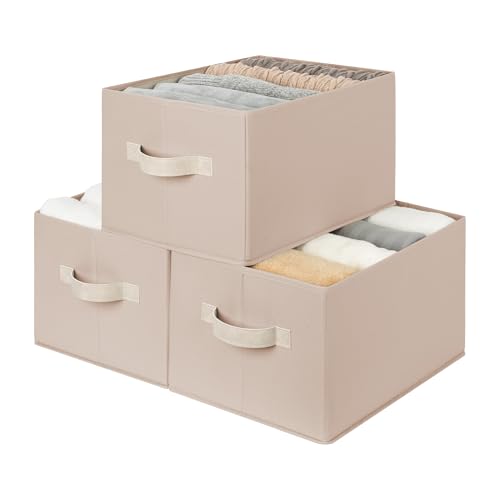
Labeled bins are useful for smaller items that tend to mix together — washcloths, hand towels, pillowcases, cleaning supplies. A bin with a label means everything has a clearly defined home, and putting things away becomes automatic.

I have these clip-on basket labels, and they’re perfect for labeling bins all around your home.

A shelf riser creates an extra level of usable space on a single shelf — great for a closet that’s running out of room vertically. Stack items underneath and on top instead of just in one layer. Note: This isn’t a great option if your linen closet has wire shelving, because it could easily slip through.
None of these are expensive. And none of them require any installation beyond sliding them onto a shelf.
What to Do If You Don’t Have a Dedicated Linen Closet
No linen closet? You’re in good company. Plenty of homes — especially older ones and smaller ones — just don’t have one.
Or maybe you’re like me, with a linen closet that’s so small it barely holds anything!
The good news is that a dedicated closet isn’t actually a requirement. The key principle is simply this: store linens as close to where they’re used as possible.
A few solutions that work well:

Under-bed storage is one of the most underused spaces in the house. Flat zippered storage bags slide easily under most beds and are perfect for keeping spare sheet sets right in the room they belong to.
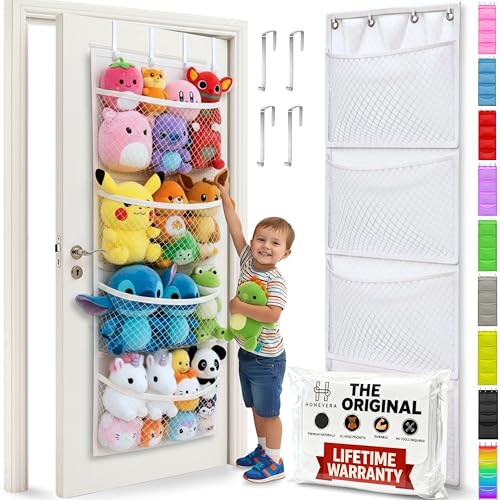
Over-door organizers on bathroom or bedroom doors work well for towels, washcloths, and small extras. The back of a door is prime real estate that most people completely ignore. [affiliate link]
A dedicated shelf in a hall closet or bedroom closet works just as well as a linen closet if it’s organized with the same zoning principle. Designate one section for linens, keep it edited, and it functions exactly the same way.

A storage ottoman or bench at the foot of the bed is a great dual-purpose solution — it provides seating or a surface while storing spare sheet sets inside.
Pick whichever solution fits your space and your budget. The location matters less than having a consistent, designated spot that everyone in the house knows about and uses.
A Linen Closet System That Works for Your Home
A well-organized linen closet isn’t about having the most beautiful folded towels on the internet.
It’s about opening the door and immediately finding what you need without anything falling on your head.
Edit down to what you actually use. Fold sheets as complete sets. Zone your shelves by frequency of use. Add a divider or two to keep things in place.
That’s the whole system. Simple, sustainable, and genuinely useful every single week.
New to this community? Start here, friend!